



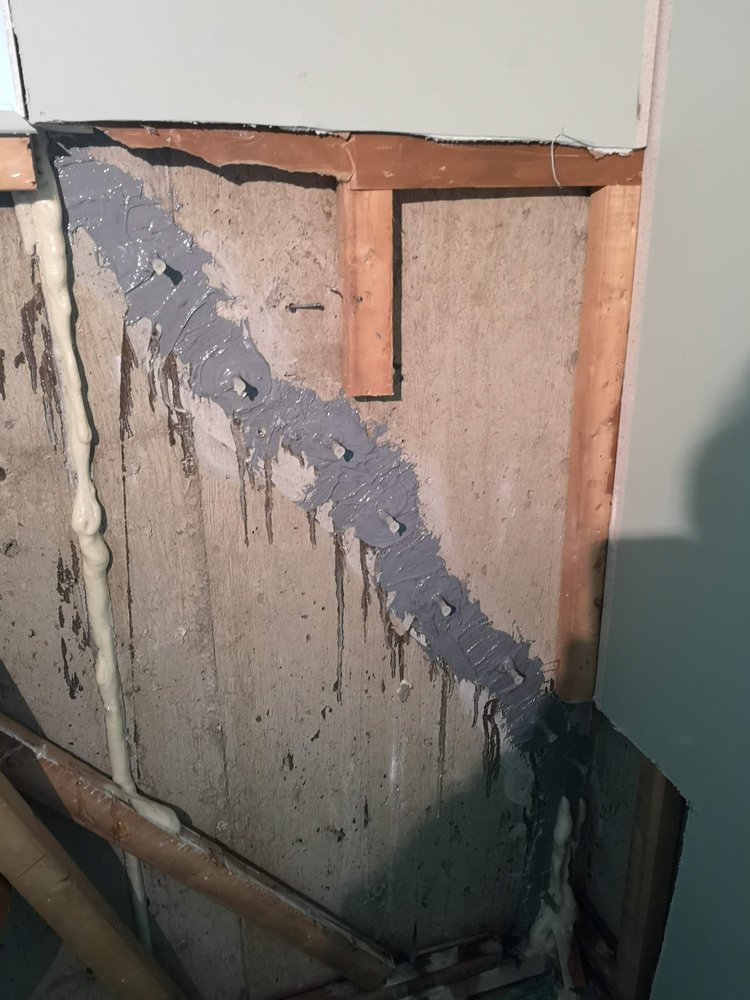
Foundation Wall Cracks Are Often Early Structural Warning Signs
Many homeowners first notice a basement crack during renovations, after heavy rainfall, or when removing drywall from unfinished basement walls. In some cases, the crack appears small and harmless. In others, the gap widens, shifts, or begins allowing moisture into the home.
The images above show professional crack monitoring gauges installed across foundation wall cracks. These devices are commonly used by foundation repair specialists to track structural movement over time and determine whether the wall is stable or actively shifting.
This is an important step because not all cracks are the same.
Some basement wall cracks are cosmetic shrinkage cracks caused during the curing process of concrete. Others are signs of structural stress caused by soil movement, hydrostatic pressure, frost expansion, drainage problems, or long-term settlement.
According to the Canada Mortgage and Housing Corporation (CMHC), water infiltration and foundation movement are among the most common structural concerns affecting Canadian basements, especially in regions with freeze-thaw cycles and expansive clay soils like Alberta.
Why Crack Monitoring Is Important
A crack gauge allows foundation specialists to measure movement with precision over time.
The monitoring systems shown in the images help determine:
- Whether the crack is widening
- If the wall is shifting laterally
- Whether seasonal movement is affecting the structure
- If structural reinforcement may be required
- Whether waterproofing alone will solve the problem
This process is critical because repairing a foundation too early — before understanding whether the movement is active — can sometimes lead to recurring cracks later.
Professional monitoring provides evidence-based repair recommendations rather than guesswork.
Research Shows Foundation Moisture Problems Are Extremely Common
Basement and foundation issues are more common than many homeowners realize.
Research from the American Society of Home Inspectors (ASHI) estimates that:
- More than 60% of homes experience below-grade moisture problems
- Approximately 38% of homes are at risk of basement mold due to moisture intrusion
- Foundation movement and water pressure are leading contributors to basement deterioration
In Edmonton and surrounding Alberta communities, these risks increase because of:
- Expansive clay soil conditions
- Spring snowmelt
- Freeze-thaw expansion cycles
- Hydrostatic pressure buildup around basement walls
- Poor exterior drainage systems
Over time, pressure against the concrete foundation wall can create fractures that worsen seasonally.

Signs a Foundation Crack May Be Structural
Certain cracks require immediate professional evaluation.
Warning signs include:
Horizontal Cracks
Often associated with pressure buildup and potential wall failure.
Stair-Step Cracks
Common in block foundations and may indicate shifting settlement.
Wide Vertical Cracks
Vertical cracks wider than 1/4 inch may suggest active movement.
Water Seepage
Moisture entering through the crack often indicates hydrostatic pressure.
Bowing Basement Walls
One of the strongest indicators of structural stress.
Reappearing Cracks
If previous repairs fail repeatedly, the underlying structural issue may still exist.
The crack gauges shown in the photos are often installed when movement is suspected but further observation is needed before determining the final repair strategy.
What Causes Foundation Wall Cracks?
Foundation cracks can develop for several reasons, including:
- Soil expansion and contraction
- Hydrostatic pressure from groundwater
- Improper grading around the home
- Clogged weeping tile systems
- Freeze-thaw cycles
- Poor drainage
- Natural settlement
- Excess moisture around the foundation
In Alberta, expansive clay soil is one of the leading contributors to foundation movement because the soil expands significantly when wet and contracts during dry periods.
This constant movement places stress on basement walls over time.
Common Structural Crack Repair Solutions
The correct repair depends on the severity of movement, water intrusion, and structural condition of the wall.
Epoxy Injection
Used to structurally bond concrete cracks and restore integrity.
Polyurethane Injection
Designed to stop active water leakage while remaining flexible.
Carbon Fiber Reinforcement
Adds structural support to bowing or cracked walls.
Crack Stitching Systems
Metal or composite reinforcement systems stabilize cracked concrete walls.
Waterproofing Systems
Interior or exterior waterproofing reduces hydrostatic pressure around the home.
Foundation Stabilization
In severe cases, underpinning or wall anchoring may be required.
A professional inspection helps determine which repair method is appropriate.
Foundation Repair Solutions Comparison
| Repair Method | Best Used For | Main Benefit |
|---|---|---|
| Epoxy Injection | Structural vertical cracks | Restores concrete strength |
| Polyurethane Injection | Active water leaks | Flexible waterproof seal |
| Carbon Fiber Straps | Bowing basement walls | Prevents additional movement |
| Crack Stitching | Structural wall cracks | Reinforces damaged concrete |
| Wall Anchors | Severe wall movement | Pulls wall back into position |
| Exterior Waterproofing | Water pressure problems | Stops moisture before entry |
Why Early Detection Matters
Foundation damage rarely improves without intervention.
Small cracks can gradually become:
- Larger structural fractures
- Basement leaks
- Mold and moisture problems
- Wall movement
- Flooring damage
- Framing stress
- Reduced property value
Early monitoring and repair typically cost significantly less than major structural reconstruction later.
Frequently Asked Questions
Are basement wall cracks normal?
Small hairline shrinkage cracks can be normal in poured concrete foundations. However, widening cracks, horizontal cracks, leaking cracks, or shifting walls should always be professionally inspected.
How do crack monitoring gauges work?
Crack gauges measure movement across a foundation crack over time. They help determine whether the crack is stable or actively shifting.
Can a foundation crack be repaired permanently?
Many cracks can be permanently stabilized using epoxy injection, crack stitching, waterproofing, or structural reinforcement systems, depending on the cause of the damage.
Is a leaking basement crack structural?
Not always. Some leaking cracks are primarily waterproofing issues, while others may indicate active structural movement. A professional inspection is necessary to determine the cause.
What causes cracks to worsen during winter?
Freeze-thaw cycles and expanding moisture in surrounding soil can place additional pressure on basement walls during colder months.
Should I buy a house with foundation cracks?
Not all foundation cracks are severe, but the property should always be evaluated by a qualified structural or foundation professional before purchase.
How much movement is considered dangerous?
Even small measurable movement can indicate ongoing structural stress. Crack monitoring helps determine whether the movement is seasonal, stable, or worsening over time.
Final Thoughts
Foundation cracks should never be ignored simply because they appear small. Monitoring systems like the ones shown in these images help identify whether a crack is cosmetic, leaking, or structurally active.
For Edmonton homeowners, early detection is one of the most important steps in preventing larger structural and waterproofing problems later.
Professional inspections, monitoring, and evidence-based repair recommendations help ensure the foundation remains stable, dry, and protected long term. Contact us for free estimates.